

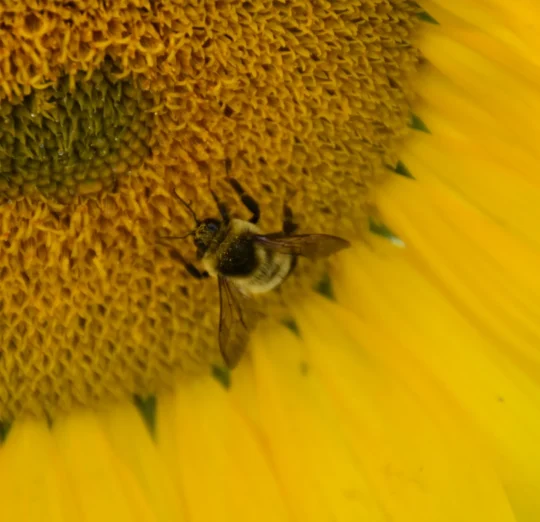
Delta Farmland and Wildlife Trust (DFWT) is excited to conclude our first summer of pollinator monitoring within farmland in Delta.
As one of the most efficient pollinators, bumblebees play an important role throughout ecosystems, and are especially vital in farmland for pollinating crops such as blueberries, strawberries and tomatoes.
Local pollinator populations are decreasing due to loss of habitat, pesticide use, climate change, and competition with invasive species. Habitat loss is one of the main drivers of conservation concern for local pollinator species.
DFWT works with farmers to expand grassland habitat in the Fraser River delta through our Grassland Set-aside (GLSA) program. Grassland fields are planted to provide essential habitat for species which rely on grasslands in the delta. Select farm fields are planted with diverse flowering resources to support local pollinators throughout the region.
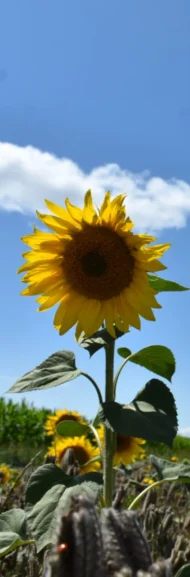
The aim of this study was to monitor and identify the abundance and diversity of bumblebees utilizing flowering GLSAs. By conducting point surveys, we were able to determine which species of bumblebee are using GLSAs for foraging and determine which flowering species were used most abundantly.
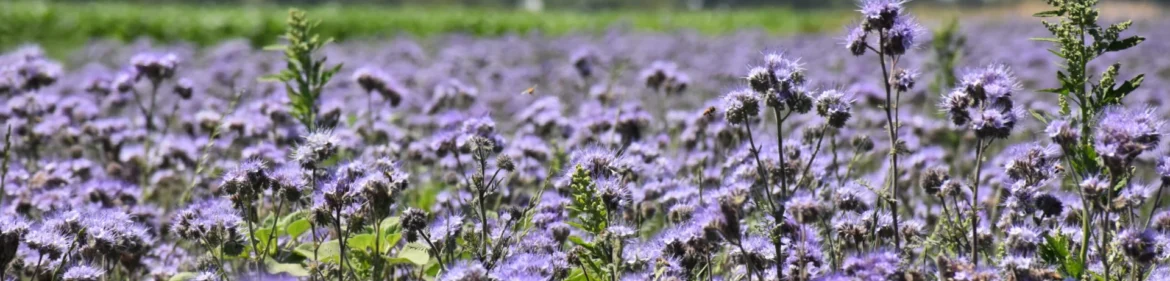
Five GLSA fields were monitored twice throughout the summer, in 45-minute point surveys. A total of 7 species and 213 individual bumblebees were observed.
The most dominant flower found throughout these fields were phacelia and sunflowers, and the both supported a similar number of bumblebee visits throughout the surveys.
The most frequently observed species was the Eastern Bumblebee, which is an introduced species in British Columbia. The Eastern, Red-belted, and Two-form bumblebees were detected in each GLSA. On average, 5.3 species of bumblebee were recorded during each point survey.
Take a look at some of the bumblebees we identified below.
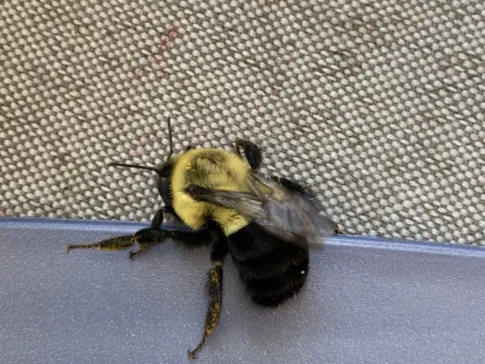
Eastern Bumblebee
(bombus impatiens)
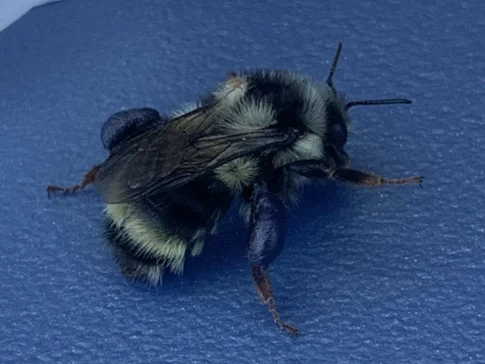
Two-form Bumblebee
(bombus bifarius)
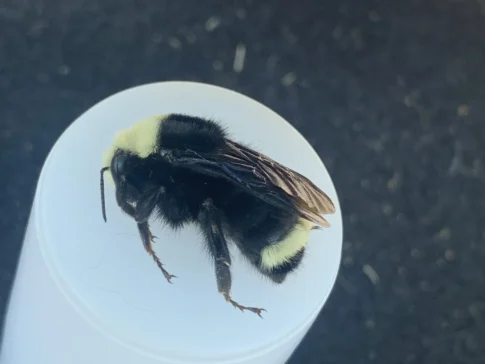
Yellow-faced Bumblebee
(bombus vosnesenskii)
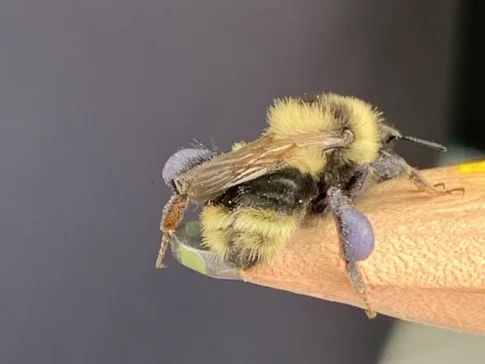
Red-belted Bumblebee
(bombus rufocinctus)
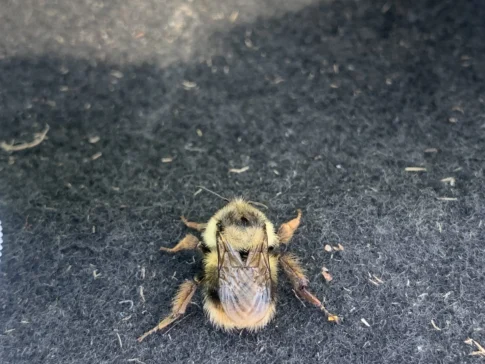
Fuzzy-horned Bumblebee
(bombus mixtus)
With this first-year baseline data, DFWT is excited to continue surveying to monitor, and track, the abundance and diversity of native and introduced pollinators throughout Delta, and Metro Vancouver.